
In an era where building safety is non-negotiable, fireproofing materials play a critical role in safeguarding lives, property, and infrastructure. From commercial high-rises to industrial facilities and marine vessels, the right firestop solution can mean the difference between containment and catastrophe. Traditional options like Fireseal sealants, MCT (Multi-Cable Transit) systems, and Flamemastic mastics have long been staples in passive fire protection. However, they often fall short in durability, versatility, and long-term performance. Enter Firesafe Fire Proof Mortar – a robust, cement-based powerhouse designed to deliver unmatched fire resistance and reliability. This article explores why Firesafe stands head and shoulders above the competition as the superior alternative for modern fireproofing needs.
Understanding the Landscape: A Quick Overview of the Contenders
Before diving into the advantages, let’s briefly profile the players:
- Fireseal Sealants: These are flexible, intumescent or silicone-based compounds typically used for sealing gaps around pipes, cables, and joints. They expand under heat to form a barrier but are prone to degradation from environmental stresses.
- MCT Systems: Modular cable and pipe transit frames with compressible modules, offering mechanical sealing for multiple penetrations. They’re lightweight and adaptable but require complex installation and can be vulnerable in high-movement areas.
- Flamemastic: A water-based, sprayable mastic primarily for protecting electrical cables and small voids. It’s cost-effective for targeted applications but limited in scope and structural integrity.
While these solutions have their niches, they often prioritize short-term flexibility over enduring strength – a trade-off that Firesafe Fire Proof Mortar elegantly resolves.
The Game-Changer: What Makes Firesafe Fire Proof Mortar Exceptional?
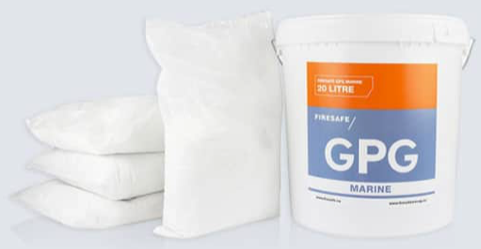
Firesafe Fire Proof Mortar, such as the renowned GPG variant, is a lightweight, vermiculite-infused cementitious compound that hardens into a rock-solid, fire-resistant barrier. Infused with high-performance aggregates like vermiculite, it not only meets but exceeds national building codes for fire resistance, providing up to 4 hours of protection against flames, smoke, and toxic gases. Unlike liquid sealants that cure into a pliable form, Firesafe mortar sets permanently, creating an impenetrable seal for penetrations in walls, floors, and decks – ideal for cables, pipes, ducts, and even large voids.
Its formulation ensures low thermal conductivity, meaning it absorbs and dissipates heat effectively without cracking or slumping under extreme temperatures. This makes it a go-to for demanding environments like offshore platforms, data centers, and high-traffic buildings.
Head-to-Head: Firesafe vs. the Competition
To illustrate Firesafe’s superiority, consider the key metrics where it excels. The table below compares core attributes based on industry standards and real-world performance data.
| Feature | Firesafe Fire Proof Mortar | Fireseal Sealants | MCT Systems | Flamemastic |
|---|---|---|---|---|
| Fire Rating | Up to 4 hours; vermiculite-enhanced for superior heat absorption | 1-3 hours; expands but may char or fail under prolonged exposure | Up to 4 hours; module-dependent, but gaps can form if not perfectly fitted | 1-2 hours; effective for cables but limited to small areas |
| Durability & Longevity | Hardens to a rigid, non-degradable structure; resistant to vibration, moisture, and chemicals | Flexible but degrades over time from UV, moisture, or movement; requires frequent reapplication | High tensile strength but modules can compress unevenly in dynamic environments | Water-based; prone to cracking in joints with movement; short lifespan in harsh conditions |
| Application Versatility | Ideal for large penetrations, irregular shapes, and high-volume fills; easy trowel or pour method | Best for narrow joints; messy and time-consuming for bigger gaps | Suited for multi-cable setups; complex installation needs skilled labor and frames | Sprayable for cables; not structural – limited to voids under 2 inches |
| Environmental Resistance | Excellent; waterproof once cured, gas-tight, and non-toxic | Good initial seal but vulnerable to water ingress and temperature swings | Strong against water/gas/pressure but bulky for retrofits | Moderate; expands with heat but can release smoke or soften in humidity |
| Cost-Effectiveness | Lower long-term costs due to permanence; minimal maintenance | Affordable upfront but high reapplication expenses | Higher initial investment for systems; labor-intensive | Low cost but frequent touch-ups add up |
| Ease of Installation | Simple mix-and-apply; no special tools needed | Caulking gun required; curing time varies | Multi-step assembly; precision fitting essential | Quick spray but uneven coverage on uneven surfaces |
In contrast, Firesafe’s mortar form allows for seamless integration into existing structures, filling voids up to several inches deep without shrinkage. Its non-intumescent nature means it doesn’t rely on expansion – which can sometimes lead to unpredictable bulging in sealants – but instead leverages dense, heat-sink properties for consistent performance.
Real-World Advantages: Why Builders Are Switching to Firesafe
- Unrivaled Strength and Stability: In high-stakes applications like marine bulkheads or industrial firewalls, Firesafe’s hardened matrix withstands mechanical abuse that would compromise flexible sealants. No more worrying about joint movement shearing a Fireseal application or MCT modules loosening over time.
- Superior Smoke and Gas Control: Beyond flames, Firesafe excels at blocking toxic fumes and smoke – critical in enclosed spaces. Traditional mastics like Flamemastic may produce dense smoke during combustion, exacerbating hazards.
- Eco-Friendly and Compliant: Formulated without harmful halogens or asbestos, Firesafe aligns with green building standards while delivering code-compliant ratings. It’s a sustainable choice that reduces lifecycle waste compared to disposable sealants.
- Cost Savings That Add Up: Initial application might seem comparable, but Firesafe’s “set-it-and-forget-it” reliability slashes maintenance budgets. Studies show cementitious mortars like Firesafe can extend service life by 50% over intumescent alternatives.
Case in point: Offshore installations using Firesafe GPG have reported zero penetration failures in fire drills, outperforming MCT setups that required module replacements after seismic simulations.
Conclusion: Choose Firesafe for Fireproof Confidence
When lives and assets are on the line, settling for “good enough” fireproofing isn’t an option. Fireseal sealants, MCT systems, and Flamemastic each offer quick fixes for specific scenarios, but they can’t match the comprehensive, battle-tested prowess of Firesafe Fire Proof Mortar. With its ironclad durability, effortless versatility, and proven fire containment, Firesafe isn’t just an alternative – it’s the evolution of fire safety.
Ready to fortify your projects? Consult certified Firesafe distributors today and experience the difference a truly permanent barrier makes. In fire protection, strength isn’t optional – it’s essential.